
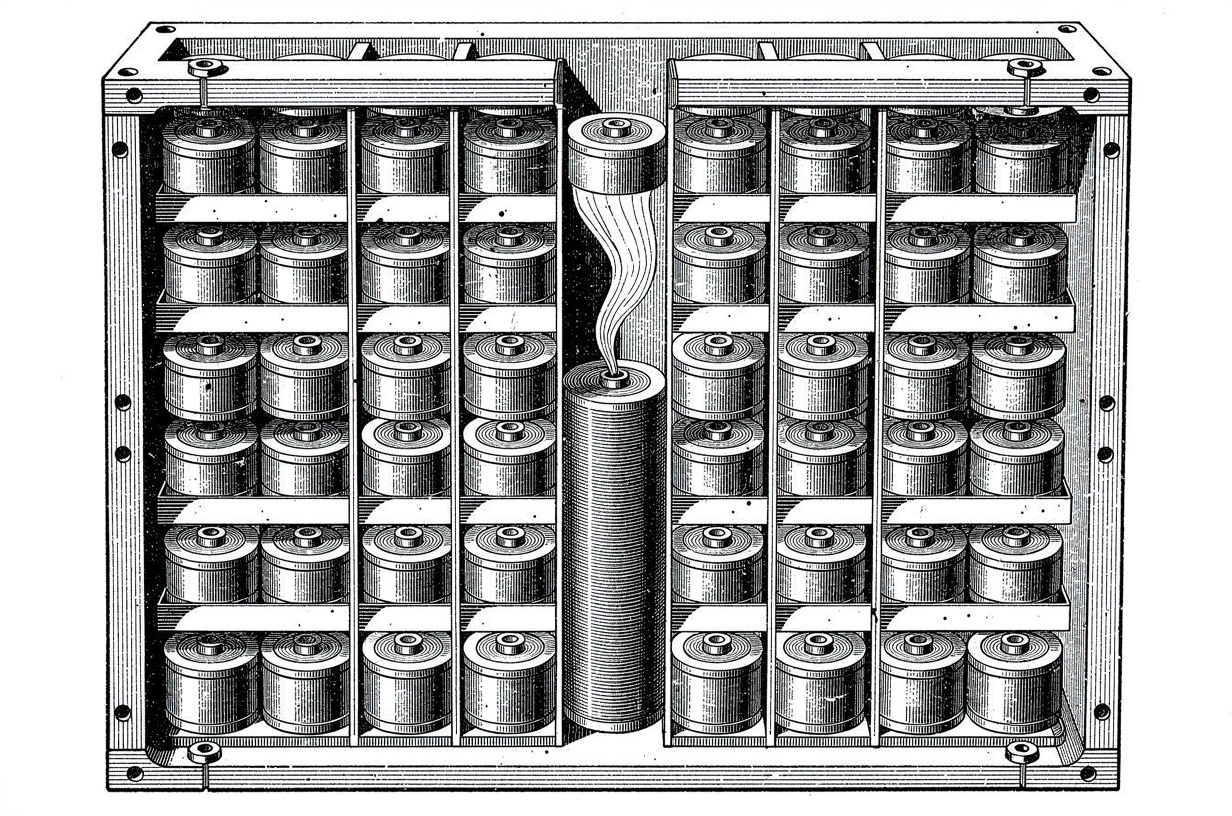
Réponse rapide : l'emballement thermique dans un pack de batteries est atténué, pas prévenu, grâce à trois niveaux agissant ensemble : des choix au niveau des cellules (format, espacement, cellules appariées), un confinement au niveau du module et du pack (barrières et évacuation dimensionnées pour le budget massique réel), et une surveillance au niveau du BMS qui coupe le courant et isole les défauts avant qu'une cellule marginale ne devienne une cellule propageant l'incident. Aucune de ces mesures n'est une garantie. Ensemble, elles définissent la marge réelle dont dispose un pack.
Un pack de VE peut typiquement consacrer 15 à 20 kg à des barrières aérogel, des feuilles en fibre céramique et une plaque de refroidissement liquide pour ralentir la propagation d'un événement thermique. Un pack de drone ou de robotique ne peut consacrer ce budget massique à rien, encore moins à des matériaux thermiques, et doit tout de même atteindre son objectif d'autonomie. La chimie des cellules et la physique de la propagation sont identiques dans les deux cas. La réponse en conception doit être différente.
Cet article traite de l'atténuation par la conception, pas de l'élimination. Aucune conception de pack ne « prévient » l'emballement thermique au sens absolu. Une bonne conception réduit la probabilité qu'une cellule entre en emballement, ralentit ou contient la propagation si cela se produit, et laisse au système le temps d'échouer de manière sûre plutôt que catastrophique.
Traiter la conception thermique comme un ajout après coup, un BMS générique sur étagère ici, une « barrière générique à ajouter » là, produit un pack qui paraît sûr sur une fiche technique et se comporte de façon imprévisible sur le terrain. La marge thermique est une décision au niveau du système, prise en fonction du budget réel de masse et de volume de l'application, pas une réflexion ajoutée après coup.
Pourquoi les solutions thermiques des VE ne se transposent pas à un pack à contrainte de poids
La plupart des recommandations publiées sur la prévention de l'emballement thermique sont écrites pour les packs automobiles, et cela se voit. Feuilles aérogel souvent classées pour survivre à des températures dépassant 1 000 °C, barrières en mica et en fibre céramique entre chaque module, plaques de refroidissement liquide : ce sont des matériaux réels et efficaces, dimensionnés pour un pack capable d'absorber des centaines de kilogrammes (typiquement dans la fourchette de 400 à 600 kg) sans menacer les performances du véhicule.
Un pack de drone ou de robotique n'a pas cette option. Chaque gramme dépensé pour une barrière thermique est un gramme non dépensé pour le temps de vol, la charge utile ou l'autonomie. Ce compromis doit être fait explicitement, cellule par cellule et couche par couche, et non par défaut selon la logique « autant de barrière que le boîtier le permet ».
C'est le cadre de tout ce qui suit : chaque mesure d'atténuation ci-dessous est évaluée en fonction de ce qu'elle coûte en poids, pas seulement de ce qu'elle apporte en marge de sécurité. Un choix évidemment correct dans un pack de batteries de 400 kg peut être totalement erroné à 4 kg.
Ce qui se passe lors d'un emballement thermique
Une cellule entre en emballement thermique lorsque la production de chaleur interne dépasse la dissipation thermique, généralement déclenché par un court-circuit interne, un dommage mécanique, une surcharge ou une source de chaleur externe. Au-delà d'une température seuil, les propres réactions chimiques de la cellule deviennent auto-entretenues et génèrent plus de chaleur qu'aucun chemin de refroidissement passif ne peut évacuer. La cellule évacue du gaz et, dans le pire des cas, s'enflamme.
Le risque que la conception du pack contrôle réellement est la propagation : si la défaillance d'une cellule reste contenue ou déclenche ses voisines. Les choix de conception à tous les niveaux ralentissent ou accélèrent cette chaîne. L'espacement des cellules, la direction d'évacuation, le placement des barrières et le temps de réponse du BMS modifient tous les probabilités, mais aucun ne change la chimie sous-jacente. Une conception de pack gère le risque de propagation. Elle n'élimine pas la possibilité qu'une cellule échoue en premier lieu.
Choix de conception au niveau des cellules affectant le risque thermique
Compromis entre format de cellule et chimie
Les cellules cylindriques et les cellules pouch échouent différemment, et cette différence compte pour la conception du pack avant même qu'une seule barrière ne soit spécifiée.
Une cellule cylindrique a un boîtier rigide en acier et un chemin d'évacuation conçu (typiquement un capuchon supérieur rainuré) qui dirige le gaz et la pression dans une direction contrôlée. Cette prévisibilité est utile : un concepteur de pack peut orienter les cellules de sorte que le gaz d'évacuation sorte à l'écart des cellules voisines et de l'électronique. La M65A de Molicel, une cellule cylindrique 21700 à 322 Wh/kg, est la cellule cylindrique à la plus haute densité énergétique du catalogue de Dan-Tech. Des cellules cylindriques comme celle-ci constituent l'essentiel de ce avec quoi Dan-Tech construit ses packs.
Une cellule pouch n'a pas de boîtier rigide. Elle gonfle avant de s'évacuer, et lorsqu'elle échoue, le mode de défaillance est moins directionnel : le pouch peut se rompre en n'importe quel point faible du scellé, et des cellules pouch empilées présentent davantage de surface de contact pour que la chaleur se transmette à une cellule voisine. Les cellules pouch atteignent aussi tendanciellement une densité énergétique gravimétrique plus élevée : la SA504 d'Amprius atteint 383 Wh/kg, la densité énergétique la plus élevée du catalogue de Dan-Tech, mais ce plafond a un prix dans une gamme tarifaire premium. La plupart des cellules cylindriques standard du catalogue, y compris des options de Molicel, Reliance et les propres cellules cylindriques 21700 d'Amprius, se situent bien en dessous de cette gamme pouch premium en termes de prix. La décision de recourir à une cellule pouch premium devrait être motivée par une exigence réelle de densité énergétique, pas par un choix par défaut.
La chimie compte aussi. Les cellules à anode de silicium SiCore d'Amprius et les cellules conventionnelles à anode de graphite NMC (Molicel, Reliance et la majeure partie du marché) ont un comportement thermique différent en conditions d'abus, en grande partie parce que le matériau d'anode réagit différemment à la chaleur et au stress mécanique. Aucun des deux choix de chimie ne supprime le besoin d'espacement, de barrières et de protection BMS. Il modifie la marge avec laquelle ces niveaux travaillent, une question à clarifier directement avec les fiches techniques des cellules et un partenaire de fabrication de packs, pas quelque chose à présumer à partir d'un nom de chimie marketing.
Espacement et orientation des cellules comme leviers de risque de propagation
La distance physique entre les cellules a un double effet : elle augmente la masse thermique qu'un événement d'emballement doit traverser avant d'atteindre une cellule voisine, et elle crée de l'espace pour que le gaz et la chaleur libérés par une cellule en évacuation se dispersent au lieu de se concentrer sur la cellule voisine.
L'orientation compte autant que la distance. Un pack conçu de sorte que le chemin d'évacuation de chaque cellule pointe vers un canal ouvert, et non vers le corps d'une autre cellule, gagne une marge de retard de propagation sans ajouter un seul gramme de matériau barrière. C'est la mesure d'atténuation la moins coûteuse disponible, et c'est une décision purement de disposition, prise au stade de la CAO, pas un achat de matériau.
Le compromis est volumétrique : plus d'espacement signifie un pack plus grand pour le même contenu énergétique, ce qui va à l'encontre du même budget de masse et de volume qui exclut les barrières épaisses. Les décisions d'espacement dans un pack à contrainte de poids se jouent généralement à quelques millimètres près, dimensionnées en fonction de la simulation thermique et de la géométrie d'évacuation spécifique de la cellule, pas selon une règle générale.
La cohérence de production comme facteur de risque thermique
Une cellule hors spécification en capacité ou en résistance interne, ou un pack dont les cellules n'ont pas été appariées avant l'assemblage, comporte un risque thermique accru qui n'a rien à voir avec la conception des barrières. Une cellule non appariée dans une chaîne série peut être poussée hors de sa fenêtre de fonctionnement sûre par le propre comportement du BMS du pack, simplement parce qu'elle ne supporte pas la même charge que ses voisines.
C'est un facteur que presque aucune recommandation publiée sur l'emballement thermique n'aborde, car la plupart sont écrites du point de vue des fournisseurs de matériaux, où le pack lui-même est le problème de quelqu'un d'autre. C'est aussi le niveau qu'un fabricant de packs contrôle directement et qu'un fournisseur de composants ne peut pas contrôler : apparier les cellules, effectuer un contrôle de réception sur chaque lot, et détecter les variances de fabrication avant, pas après, l'assemblage. Dan-Tech construit et assume l'assemblage des packs plutôt que de le confier à un sous-traitant séparé, exactement là où ce contrôle doit se situer.
Choix de conception au niveau du module et du pack
Une fois les choix au niveau des cellules établis, le niveau suivant est mécanique : comment le pack contient un défaut qui se produit réellement, sans dépenser une masse qu'il n'a pas.
Barrières de propagation. De fines feuilles en fibre céramique ou en mica entre les groupes de cellules ralentissent le transfert de chaleur pour une fraction du coût en masse d'une couche aérogel complète. La question de conception dans un pack à contrainte de poids n'est pas de savoir s'il faut utiliser une barrière, mais où. Une barrière entre chaque cellule ajoute un poids réel pour un bénéfice qui s'estompe une fois que l'espacement et l'évacuation font déjà leur travail ; une barrière aux frontières entre groupes de cellules, là où un événement d'emballement traverserait autrement vers une section bien plus large du pack, apporte plus de confinement par gramme.
Chemin d'évacuation et conception du boîtier. Le boîtier du pack devrait donner au gaz évacué un endroit où aller qui ne soit pas la baie électronique ou la structure de la cellule de l'appareil. C'est une décision de conception mécanique prise tôt, pas un matériau ajouté tard : un boîtier avec un canal d'évacuation dédié n'a besoin d'aucune masse supplémentaire pour remplir ce rôle ; un boîtier sans cela doit compenser partout avec du matériau barrière.
Confinement structurel. Le rôle du boîtier lors d'un événement de défaillance est de gagner du temps, pas d'être ignifuge. Une structure qui reste intacte pendant les secondes nécessaires à un BMS pour couper le courant et isoler un défaut accomplit un travail réel, même si elle n'est pas conçue pour contenir un incendie indéfiniment. C'est un objectif réaliste pour un boîtier à contrainte de masse, et plus honnête qu'une prétention de confinement complet.
Le principe organisateur commun aux trois : chaque gramme de confinement devrait être justifié par ce qu'il apporte réellement en retard de propagation, pas appliqué uniformément parce que c'est ce que fait une conception de référence automobile.
Protection au niveau du BMS : ce que le comportement de coupure thermique fait réellement (et ne fait pas)
La couche de protection thermique d'un système de gestion de batterie surveille la température et la tension d'une cellule ou d'un groupe, et coupe le courant ou isole un défaut lorsque l'un ou l'autre dépasse un seuil. La cellule cylindrique RS60 de Reliance, par exemple, porte une coupure thermique documentée à 80 °C à son courant de décharge continu nominal, un chiffre réel sur lequel la logique de coupure par température d'un BMS peut être réglée.
C'est significativement différent de la prévention de l'emballement thermique. Une coupure agit sur la température et la tension mesurées, ce qui signifie qu'elle réagit après qu'une cellule a déjà commencé à dériver hors de sa fenêtre sûre, pas avant. Elle peut empêcher l'état d'une cellule marginale de se détériorer sous charge continue. Elle n'annule pas un dommage déjà survenu, et elle ne peut pas réagir à un mode de défaillance qu'elle ne surveille pas, comme une perforation mécanique.
Cela vaut la peine d'être dit clairement, car c'est l'exagération la plus courante dans le contenu marketing sur l'emballement thermique : un BMS est un niveau de protection, pas une garantie. Un pack avec un BMS bien spécifié mais sans attention à l'espacement ou à l'appariement des cellules n'est pas significativement plus sûr qu'un pack sans ni l'un ni l'autre. Le véritable rôle du BMS est l'isolation des défauts et la réponse précoce, en complément des choix au niveau des cellules et du pack ci-dessus, pas en remplacement de ceux-ci.
Que demander à un partenaire de packs de batteries sur mesure au sujet de la conception thermique
La plupart des recommandations sur ce sujet sont écrites du point de vue des fournisseurs de matériaux ou des ingénieries sous contrat : voici ce qu'est l'emballement thermique, voici globalement comment il est atténué. En tant qu'ingénieur briefant un partenaire de fabrication de packs, la liste la plus utile est celle des questions à poser avant que la conception ne soit figée :
- Quels seuils de température et de tension déclenchent la coupure thermique du BMS, et avec quel temps de réponse ?
- Quelle est la justification de l'espacement cellule à cellule dans ce pack spécifique, pas de l'espacement en général ?
- Où sont placées les barrières de propagation, et quel est le compromis de poids par rapport à l'alternative de plus d'espacement ou d'une meilleure évacuation ?
- Comment les cellules sont-elles appariées avant l'assemblage, et quel est le processus de contrôle qualité à la réception sur les lots de cellules ?
- Le partenaire peut-il fournir des données de simulation ou d'essai spécifiques à la conception thermique de ce pack, pas seulement les chiffres de la fiche technique de la cellule ?
- À quoi ressemble un événement de défaillance documenté, c'est-à-dire quelles preuves le partenaire pourrait-il réellement produire si quelque chose tournait mal sur le terrain ?
Un partenaire capable de répondre à ces questions avec des éléments concrets, pas avec des assurances générales, fait le travail. Un partenaire qui se contente de répondre « nous utilisons un BMS » comme réponse complète ne le fait pas.
Normes pertinentes (et non pertinentes) pour les packs UAV et robotique
UN 38.3 et IEC 62133 sont des normes réelles et pertinentes, et les packs de Dan-Tech sont conçus pour les respecter lorsqu'un projet les intègre. Il vaut la peine d'être précis sur ce qu'elles couvrent réellement : UN 38.3 traite de la sécurité du transport (les conditions qu'une cellule ou une batterie doit survivre lors de l'expédition), et IEC 62133 traite des exigences générales de sécurité pour les cellules et batteries. Aucune des deux n'est spécifiquement une norme de propagation de l'emballement thermique, et aucune ne devrait être citée comme preuve qu'un pack contient ou retarde la propagation.
Deux normes qui apparaissent fréquemment dans le contenu automobile sur l'emballement thermique ne s'appliquent pas ici. UL 2580 est explicitement limitée aux véhicules électriques homologués pour la route et exclut explicitement les véhicules électriques légers, ce qui la place entièrement en dehors du périmètre UAV et robotique de Dan-Tech. La « règle des 5 minutes » du GB38031 chinois, la réglementation exigeant l'absence de feu ou d'explosion pendant au moins 5 minutes après le début d'un événement thermique dans une cellule, l'habitacle passagers devant rester exempt de fumée pendant cette fenêtre pour que les occupants aient le temps d'évacuer, est une fenêtre de sécurité pour l'habitacle passagers automobile. C'est une norme réelle et spécifique, et elle n'a aucun périmètre équivalent dans une application de drone ou de robotique sans habitacle passagers à protéger. Citer l'une ou l'autre comme pratique générale du secteur pour un pack UAV ou robotique reviendrait à emprunter un chiffre qui ne signifie pas ce qu'il semble signifier.
Résumé : décisions clés
- L'emballement thermique est atténué, pas prévenu. Toute affirmation dans ce domaine devrait dire « réduit » ou « retarde » le risque de propagation, jamais « prévient ».
- Les packs à contrainte de poids ne peuvent pas utiliser des barrières et des plaques de refroidissement à l'échelle automobile. Chaque choix d'atténuation doit être évalué par rapport au budget massique réel, pas à celui d'une voiture.
- Le format et la chimie des cellules définissent le profil de risque de départ avant même l'ajout d'une barrière : les cellules cylindriques s'évacuent plus prévisiblement ; les cellules pouch atteignent une densité énergétique plus élevée avec un compromis réel de poids et de coût.
- L'espacement des cellules et l'orientation d'évacuation constituent une marge de retard de propagation gratuite, disponible dès l'étape de disposition sans matériau supplémentaire.
- La cohérence de production, l'appariement des cellules et le contrôle qualité à la réception, est un facteur de risque thermique réel que la plupart des recommandations publiées ignorent entièrement.
- Une coupure thermique du BMS est un niveau de protection, pas une garantie. Elle réagit aux conditions mesurées ; elle n'empêche pas un défaut de se produire.
- UN 38.3 et IEC 62133 sont des normes réelles que les packs de Dan-Tech sont conçus pour respecter là où cela s'applique. UL 2580 et la règle des 5 minutes chinoise sont spécifiques à l'automobile et ne s'appliquent pas aux packs UAV ou robotique.
FAQ
Une conception de pack de batteries peut-elle « prévenir » l'emballement thermique ?
Aucune conception de pack ne prévient l'emballement thermique au sens absolu. Les choix de conception au niveau des cellules, du module et du BMS réduisent la probabilité d'un défaut et ralentissent ou contiennent la propagation si elle se produit, mais aucun n'élimine le risque chimique sous-jacent.
Qu'est-ce qui cause l'emballement thermique dans un pack de batteries lithium-ion ?
Une cellule entre en emballement thermique lorsque la production de chaleur interne dépasse la dissipation thermique, généralement déclenché par un court-circuit interne, un dommage mécanique, une surcharge ou une chaleur externe. Au-delà d'une température seuil, la réaction devient auto-entretenue plus rapidement qu'aucun chemin de refroidissement passif ne peut évacuer la chaleur.
Un BMS garantit-il qu'un pack ne subira pas d'emballement thermique ?
Non. Une coupure thermique du BMS surveille la température et la tension, et coupe le courant ou isole un défaut après qu'un seuil a été dépassé. C'est un niveau de protection réel, mais il agit sur des conditions mesurées après que la dérive a déjà commencé, pas avant qu'un défaut ne se produise.
Pourquoi les packs UAV et robotique ne peuvent-ils pas utiliser les mêmes barrières thermiques que les packs de VE ?
Les packs de VE peuvent consacrer des dizaines de kilogrammes à des feuilles aérogel et des plaques de refroidissement liquide sans menacer les performances du véhicule. Un pack UAV ou robotique n'a pas de budget massique équivalent, de sorte que chaque gramme dépensé pour une barrière est un gramme non dépensé pour le temps de vol, la charge utile ou l'autonomie, et l'atténuation doit être choisie en conséquence.
UN 38.3 et IEC 62133 couvrent-elles la propagation de l'emballement thermique ?
Non. UN 38.3 couvre la sécurité du transport et IEC 62133 couvre la sécurité générale des cellules et des batteries. Aucune des deux n'est une norme spécifique à la propagation, et des normes automobiles comme UL 2580 ou la règle des 5 minutes chinoise ne s'appliquent pas du tout aux packs UAV ou robotique.
La conception thermique n'est pas quelque chose qu'un partenaire de packs sur mesure devrait promettre dans un article de blog. C'est quelque chose qui vaut la peine d'être examiné ensemble en fonction de votre application réelle, de votre budget massique et de votre cycle de service. Entamez une conversation sur la conception thermique de votre pack dans la ToolBox, ou parcourez les options de cellules sous-jacentes dans le catalogue des packs de batteries lithium-ion de Dan-Tech.

.png)


