
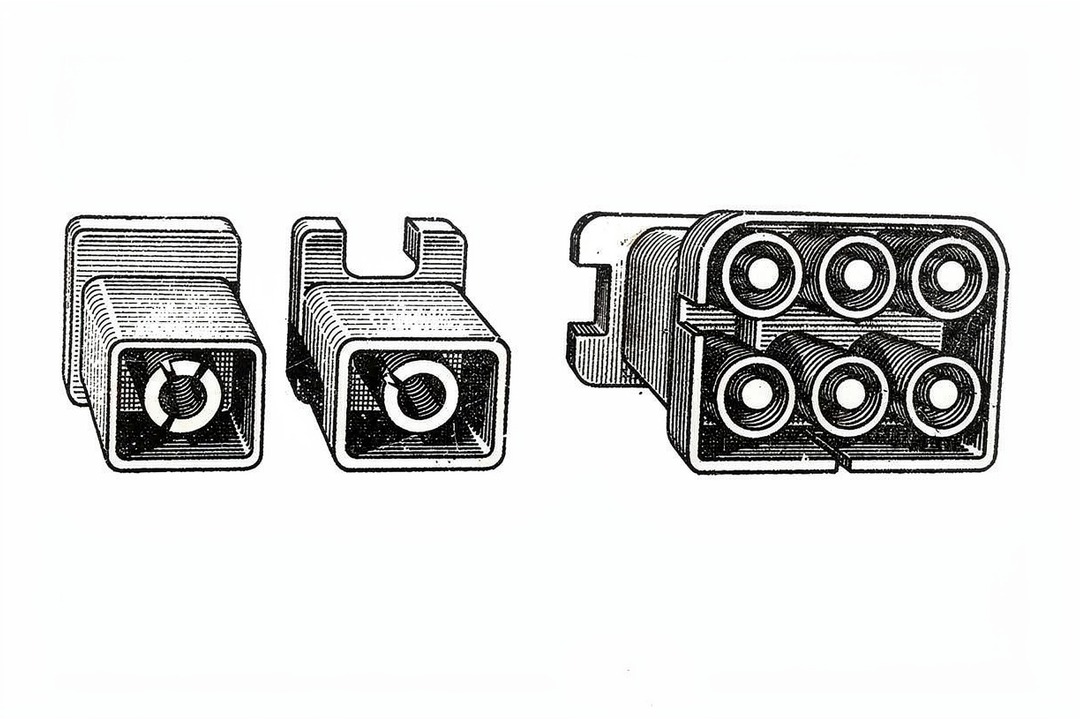
Quick answer: Connector choice for a custom battery pack should follow the pack's real peak current and duty cycle, not the connector everyone already has in a parts bin. Dan-Tech Energy, a custom Li-ion battery pack manufacturer with production in Germany and the US, builds around five connectors most often: Harting Han MPC30 and MPC60 for industrial, ruggedized, higher-pin-count builds; QS10 for mid-to-high power packs needing high peak current; and the XT60, XT90, and AS150U bullet-style lineup for lighter through mid-tier duty. None of these is exclusive, and Dan-Tech builds around whatever connector a project actually needs. The right connector is the one that fits the application, decided on the numbers.
The connector is usually the last thing specified on a custom battery pack. Cell chemistry gets weeks of analysis. BMS current tiers get sized against real load profiles. Then, late in the process, someone picks a connector because it's the one already sitting in a bin from the last project. An undersized or mismatched connector runs hot, degrades faster than the cells around it, or fails well before the pack shows any real stress.
A pack correctly specified on cell chemistry and BMS tier can still fail in the field if the connector doesn't match real peak current or real duty cycle. Connector selection is the step most often made by familiarity rather than by the numbers, and it's the cheapest mistake to fix before a design freezes.
Connector Choice Is a System Decision, Not a Component Pick
A connector is not an accessory bolted onto a finished pack. It sits directly in the current path, and it has to be sized with the same rigor as every other current-carrying component in the system, matched to the pack's real architecture.
Matching Connector Rating to BMS Current Tier
Dan-Tech's own BMS bracket tiers run 60-80A, 100A, 150A, and 200A. Each tier implies a different connector conversation:
- 60-80A tier: An XT90 has enough continuous headroom for most builds in this range. Heavier duty cycles push toward AS150U for extra margin.
- 100A tier: AS150U carries this comfortably with margin to spare. QS10 is worth considering where the physical footprint needs to shrink without losing current capacity.
- 150A tier: AS150U is stretched near the top of its practical range here, which leaves little room for transient spikes. QS10's 500A peak rating gives real headroom against short bursts that a bullet connector at this tier doesn't have.
- 200A tier: Bullet connectors run out of runway at this level. QS10 or a Harting Han MPC connector, sized to the project, are the realistic options.
Treat this mapping as a starting point for the conversation. The actual choice depends on duty cycle, ambient temperature, and how much margin the application needs.
Why the Connector Must Be Sized to Peak Current, Not Nominal or Cruise Current
A drone in steady flight, an AGV cruising a warehouse floor, and an industrial actuator idling between cycles all draw far less current than they do during takeoff, acceleration, or a hard start. Sizing a connector to the number on the spec sheet's "typical operation" line, instead of the number during the worst 2-3 seconds of real use, is how a connector that looks correct on paper runs hot in the field.
A reasonable engineering practice is to size the connector with 20-30% of margin above the worst measured peak current. That margin absorbs manufacturing tolerance, temperature derating, and the inevitable gap between a lab test and a field deployment.
Five Connectors Dan-Tech Builds Around Most
These are five of the most requested connectors in Dan-Tech's builds. Dan-Tech builds around whatever connector a project actually needs, including customer-specified parts outside this set.
Harting Han MPC30 and MPC60: Industrial, Ruggedized, Higher-Pin-Count Builds
The Harting Han MPC30 and MPC60 are modular rectangular industrial connectors, used on builds that need locking engagement, higher pin counts, or a housing that survives vibration and repeated docking cycles better than a bullet-style connector. They're a natural fit for fixed industrial installations, panel-mount applications, and any build where power and signal need to share one connector housing.
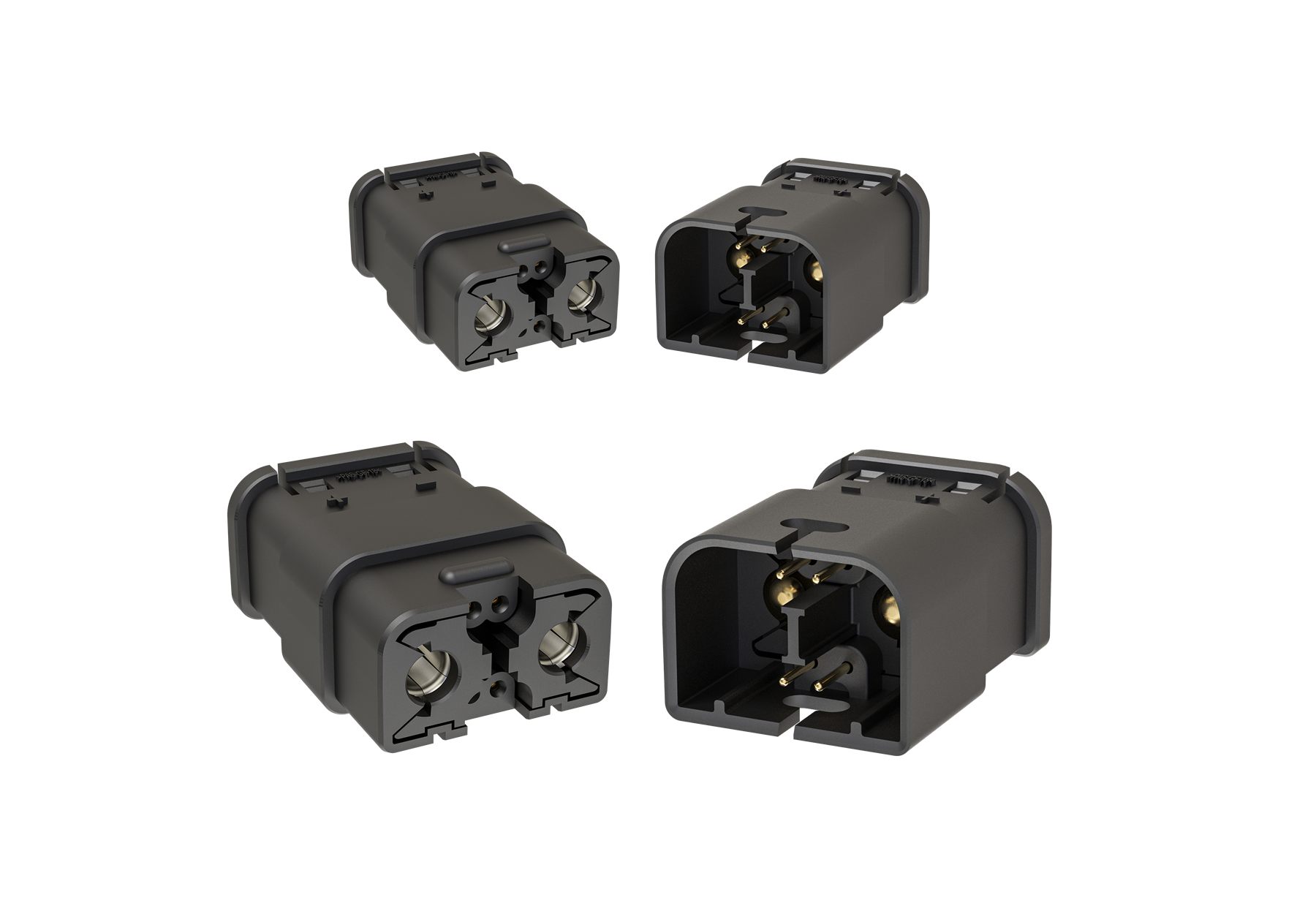
Both are modular by design: the insert configuration is sized to the project rather than fixed to a single current rating out of the box, which is part of why they show up on higher-pin-count, mixed power-and-signal builds where a single bullet connector can't do the whole job. The practical benefit of that modularity goes beyond flexibility on any one project. A single Han MPC housing family can cover several different pin-and-power configurations across a customer's product line, which means a systems integrator can standardize on one connector family instead of stocking and qualifying a separate discrete connector for every variant. That lowers part count and requalification work every time a design changes.
The locking mechanism is the other half of the case for industrial and UAV docking use. A friction-fit bullet connector like XT60 or XT90 relies on spring tension in the contacts to stay mated; under sustained vibration, or across repeated docking cycles, that spring tension is exactly what degrades first. The Han MPC's positive locking latch keeps the housings mated independent of contact spring force, which is why it holds up better on a vibrating airframe or a robot that docks and undocks on a charging station many times over its service life.
Combining power and data in one housing has a harness-level benefit too. A build that needs both a power connection and a data link, DroneCAN telemetry alongside the main battery feed, for example, either runs two separate connectors and two separate mating points, or consolidates both into one Han MPC housing with mixed inserts. Consolidating means one connector to route, one connector to protect from vibration and moisture, and one mating event instead of two: a real simplification on a harness that would otherwise need a dedicated data connector running alongside an XT60 or XT90 power line. Dan-Tech sources and integrates the Harting Han MPC series into pack designs; it doesn't manufacture the connector itself.
QS10: High-Current Bullet Connector for Mid-to-High Power Packs
The QS10 is rated for 50A continuous and 500A peak, which makes it a good fit anywhere a pack needs to survive a hard transient current spike without stepping up to a full industrial connector housing. That peak rating is the connector's real advantage: a bullet-style connector this compact rarely carries that much headroom above its continuous rating.
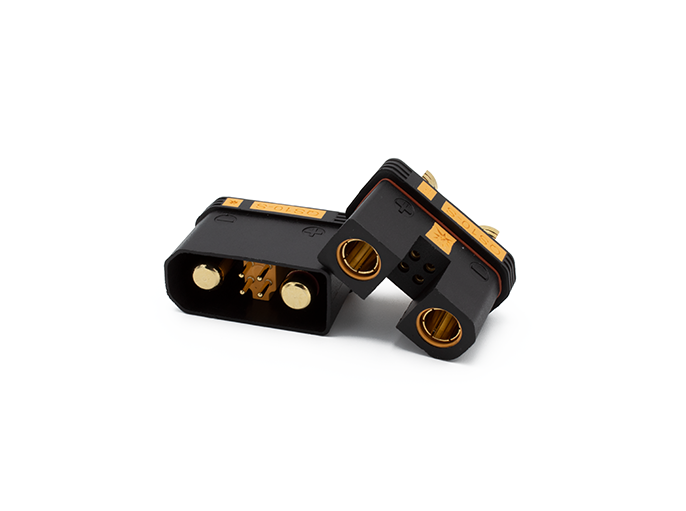
Packs with motor inrush, regenerative braking spikes, or hot-swap events under load are the clearest use case. Dan-Tech uses the QS10 where a pack's peak current profile exceeds what AS150U comfortably handles, without the added footprint of an industrial connector.
XT60, XT90, and AS150U: The Established Bullet Lineup
XT60, XT90, and AS150U are bullet-style connectors that cover lighter-duty through mid-tier packs. They're widely used in drone, robotics, and light industrial builds because they're compact, simple to terminate, and well understood by integrators on both sides of a build.
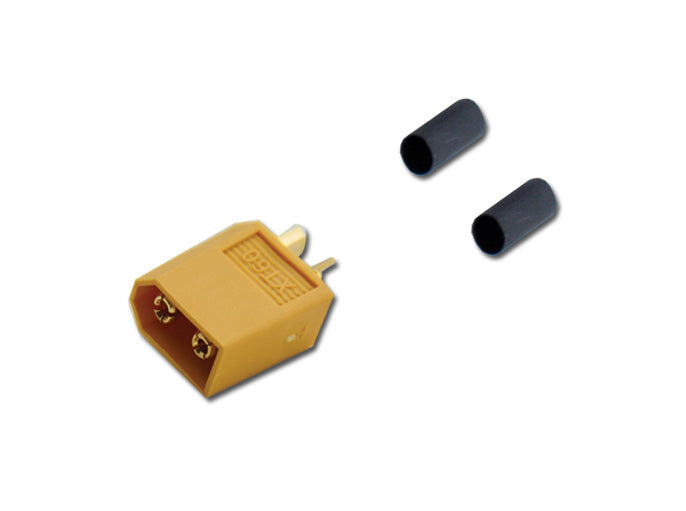
XT60 fits lighter loads where board space and weight matter more than headroom.
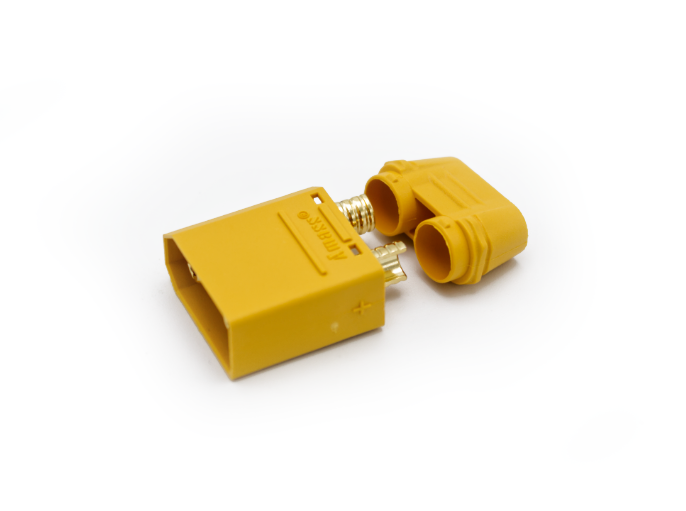
XT90 steps up the continuous rating for mid-tier packs.
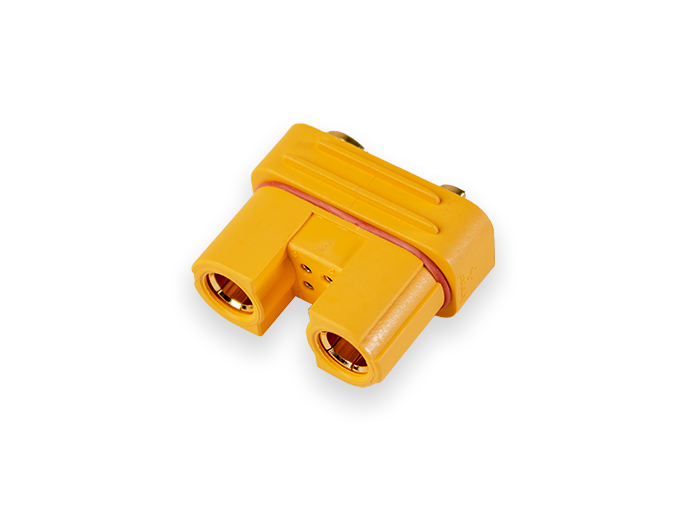
AS150U covers the top of this range, with enough continuous capacity for packs approaching the 150A BMS tier before a project needs to move to QS10 or an industrial connector instead.
Comparison Table
| Connector | Typical Current Rating | Typical Use Case |
|---|---|---|
| Harting Han MPC30 | Sized per project (modular inserts) | Industrial, panel-mount, mixed power/signal, ruggedized builds |
| Harting Han MPC60 | Sized per project (modular inserts) | Higher-pin-count industrial builds, locking engagement |
| QS10 | 50A continuous / 500A peak | Mid-to-high power packs with high transient current |
| XT60 | Lower-current, lighter-duty range | Lightweight drone and light-robotics packs |
| XT90 | Mid-tier continuous current | Mid-tier drone, robotics, and light industrial packs |
| AS150U | Upper mid-to-high continuous current | Higher-power drone, robotics, and industrial packs |
Actual unit cost depends on volume, harness configuration, and BMS pairing, and gets quoted per project.
Not an Exhaustive List
These five cover the large majority of Dan-Tech's builds, but they're a starting point, not a catalog boundary. A project with a different connector already specified, whether by a customer's existing harness, a regulatory requirement, or a legacy system it has to plug into, gets built around that connector instead. The engineering conversation is about matching the application.
Matching Connector to Application: Drone/UAV vs Robotics/AGV vs Industrial Equipment
Current rating is only half the decision. The other half is what the connector has to survive mechanically, and that depends heavily on which of these three application categories a pack falls into.
Drone and UAV Packs
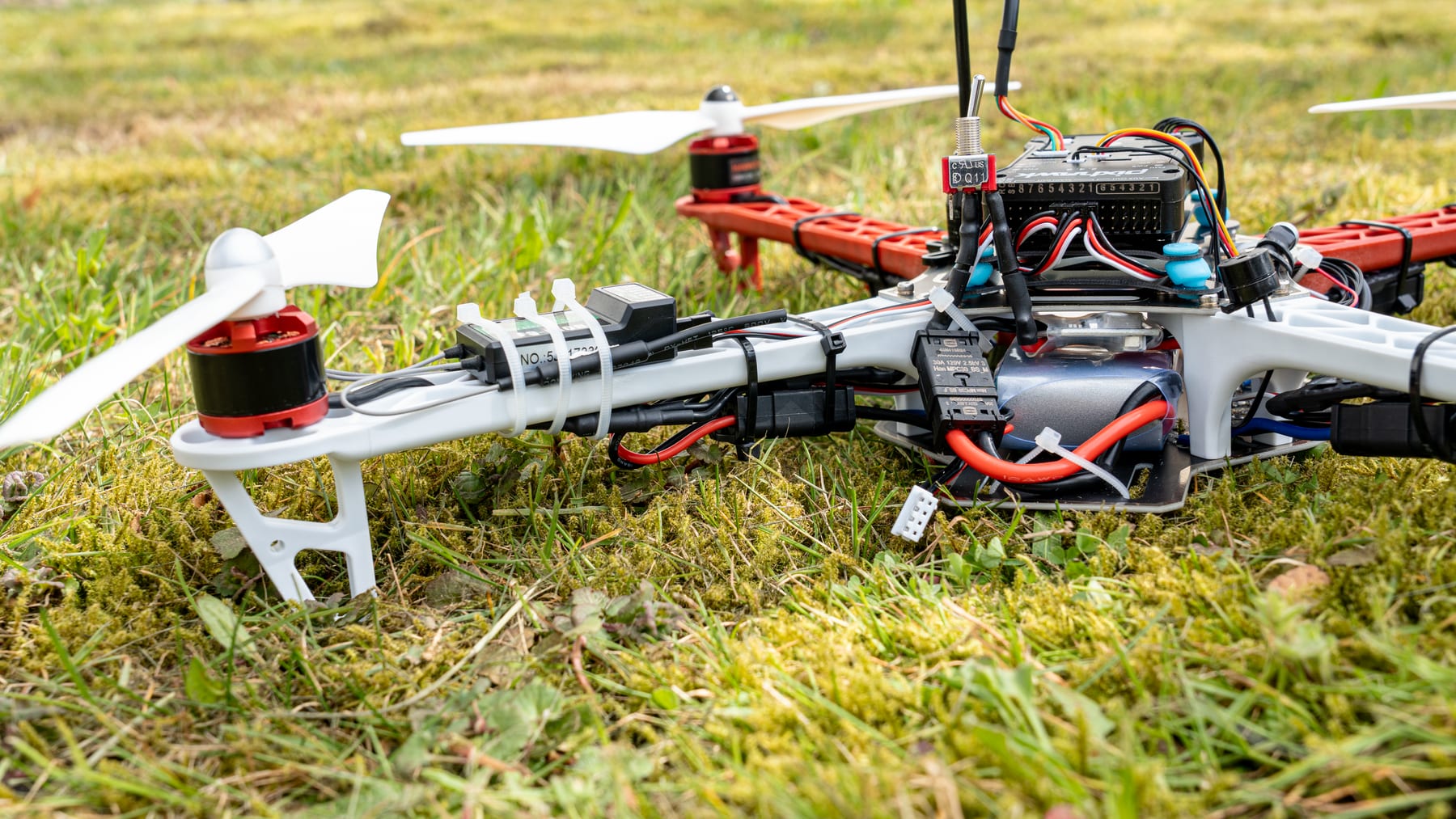
Drone packs are weight-driven first. Every gram in the connector and its wiring is a gram not available for flight time or payload, which is why lighter bullet connectors like XT60 and XT90 dominate this category. Mating-cycle counts are also low: a drone battery gets plugged and unplugged far less often than a docking robot, so connector wear from repeated mating isn't usually the limiting factor. Peak current still matters, particularly around takeoff and aggressive maneuvers, which is where undersizing for cruise current instead of peak current shows up first.
Robotics and AGV Packs
Robotics and AGV packs live a different life: frequent docking or hot-swap cycles, sustained duty-cycle current rather than short bursts, and connectors that get mated and unmated far more often over the pack's service life. Mating-cycle life becomes a real design constraint here, not just a current-rating question. A connector rated correctly for current but not built for repeated docking will wear out its contacts long before the pack's cells show any degradation.
Industrial Equipment
Industrial equipment introduces requirements drone and robotics packs rarely see: locking engagement so a connector can't vibrate loose, higher pin counts to combine power and signal in one housing, and mechanical ruggedization for fixed or semi-fixed installations. This is the natural home for the Harting Han MPC series, where the modular insert system and locking housing address needs that a bullet connector, regardless of its current rating, isn't built to solve.
Certification and IP-Rating Exposure Tied to Connector Choice
Connector choice isn't only an electrical and mechanical decision. It also affects what a finished pack can honestly claim about certification and environmental protection.
Where the Connector Sits in UN 38.3 / IEC 62133-2 Scope
UN 38.3 (transportation) and IEC 62133-2 (safety) test reports are issued per exact pack configuration: cell, BMS, connector, and cable termination together. A report does not transfer across a different configuration. A change of connector can change what a test report actually covers. Every Dan-Tech pack is custom-built, so certification scope and cost get worked out per project rather than promised in advance. Dan-Tech does not claim any pack "is certified" outright; certification is scoped and quoted per project.
IP Ratings Apply to the Connector and Gland, Not Just the Enclosure
An enclosure's ingress protection is only as good as its weakest sealed point, and connectors are frequently that weak point. Bullet connectors like XT60, XT90, and AS150U carry no ingress protection of their own, and even industrial connectors like the Harting Han MPC30 and MPC60 aren't inherently sealed against water ingress in their base configuration, unless a project adds sealing hardware on top.
Dan-Tech doesn't say a pack "is IP67 certified" or "is rated IP67." A pack can be designed to meet a specific IP rating, scoped to the exact connector, gland, and vent configuration tested, and that scope matters most at the connector interface, where the actual failure point usually sits.
What to Ask Your Battery Pack Supplier About Connector Choice
A few direct questions surface most connector mismatches before they become a field failure:
- What's the actual worst-case peak current the pack sees, and how much margin does the connector rating give above it?
- How many mating cycles does this connector need to survive over the pack's service life, and is that number closer to a drone's low cycle count or a docking robot's high one?
- If this pack needs to meet an IP rating, does that scope include the connector and gland, or only the enclosure?
- If UN 38.3 or IEC 62133-2 matters for this project, has the connector and cable termination been part of any prior test scope, or does that need to start from zero?
These questions are also where a generic off-the-shelf supplier and a custom pack builder tend to diverge. A supplier building to a fixed catalog config can't always change the connector without re-tooling the whole product. A custom build can size the connector to the actual application from the start, which is a large part of what a custom pack process is for.
Common Mistakes in Connector Selection
Undersizing for Peak Instead of Nominal or Cruise Current
The single most common mistake: choosing a connector based on the number on the datasheet's typical-operation line instead of the worst few seconds of real use. A connector that looks correctly sized against cruise current can still run hot and degrade early against real peak current.
Picking a Connector by Familiarity Instead of Duty Cycle or Application
Defaulting to "the connector we always use" skips the actual sizing exercise. A connector that was correct on the last project isn't automatically correct on this one if the current profile, mating-cycle count, or environmental exposure is different.
Ignoring Mating-Cycle Life on Hot-Swap or Docking Packs
A connector correctly sized for current can still fail early on a pack that gets plugged and unplugged constantly, if its contacts aren't built for that mating-cycle count. This is a mechanical wear question, separate from the electrical rating, and it's the one most often skipped when a drone-style connector gets reused on a docking robot without re-checking the fit.
Summary: Key Decisions
- Size the connector to the worst measured peak current, with 20-30% of margin, well above the nominal or cruise figure.
- Match connector choice to the pack's BMS current tier as a starting point, then adjust for duty cycle.
- Harting Han MPC30/MPC60 fit industrial, ruggedized, and higher-pin-count builds; QS10 fits mid-to-high power packs with high peak current; XT60, XT90, and AS150U cover the lighter-to-mid-tier bullet-connector range.
- Drone packs are weight-driven with low mating-cycle counts; robotics and AGV packs need mating-cycle life and sustained duty-cycle capacity; industrial equipment needs locking engagement and higher pin counts.
- IP ratings apply to the connector and gland, not just the enclosure, and industrial connectors like Harting Han MPC still need added sealing to meet a water-ingress rating.
- These five connectors aren't exhaustive. A custom pack process builds around the connector the application actually needs.
FAQ
What connector should I use for a 100A battery pack?
An AS150U carries a 100A tier comfortably with margin to spare. If the pack needs a smaller footprint at the same current, or expects meaningful peak spikes above 100A, QS10 is worth evaluating instead.
Is XT60 or XT90 better for a drone battery pack?
XT90 gives more continuous current headroom, which matters for larger drones or heavier payloads. XT60 stays the better fit where weight matters more than headroom and the pack's current draw is lower.
What's the difference between QS10 and AS150U?
AS150U is rated for higher continuous current in a similar bullet-connector form factor. QS10's advantage is peak current: 500A peak against a 50A continuous rating, which suits packs with short, high-current transients rather than sustained high draw.
Do Harting Han MPC connectors carry an IP rating?
The Harting Han MPC30 and MPC60 aren't inherently sealed against water ingress in their base configuration. A pack can be designed to meet a higher IP rating, but that requires additional sealing hardware scoped to the specific connector and gland configuration, not the connector alone.
Does the connector affect UN 38.3 or IEC 62133-2 certification?
Yes. These test reports are issued per exact pack configuration, including the connector and cable termination, not as a generic certificate. Changing the connector after a test report is issued can mean the report no longer covers the pack as built.
Related reading: matching connector to BMS current tier covers the sizing logic in more depth for AGV and robotics applications, docking-cycle connector wear vs. drone mating cycles goes deeper on the mechanical side, and connector and cable-gland ingress ratings covers the full IP data referenced above.
If you're scoping a pack's connector requirements for a real project, the ToolBox is the place to start working through the specifics. To see the packs and configurations these connectors get built into, the Lithium Ion Battery Packs catalog is the next stop.

.png)


